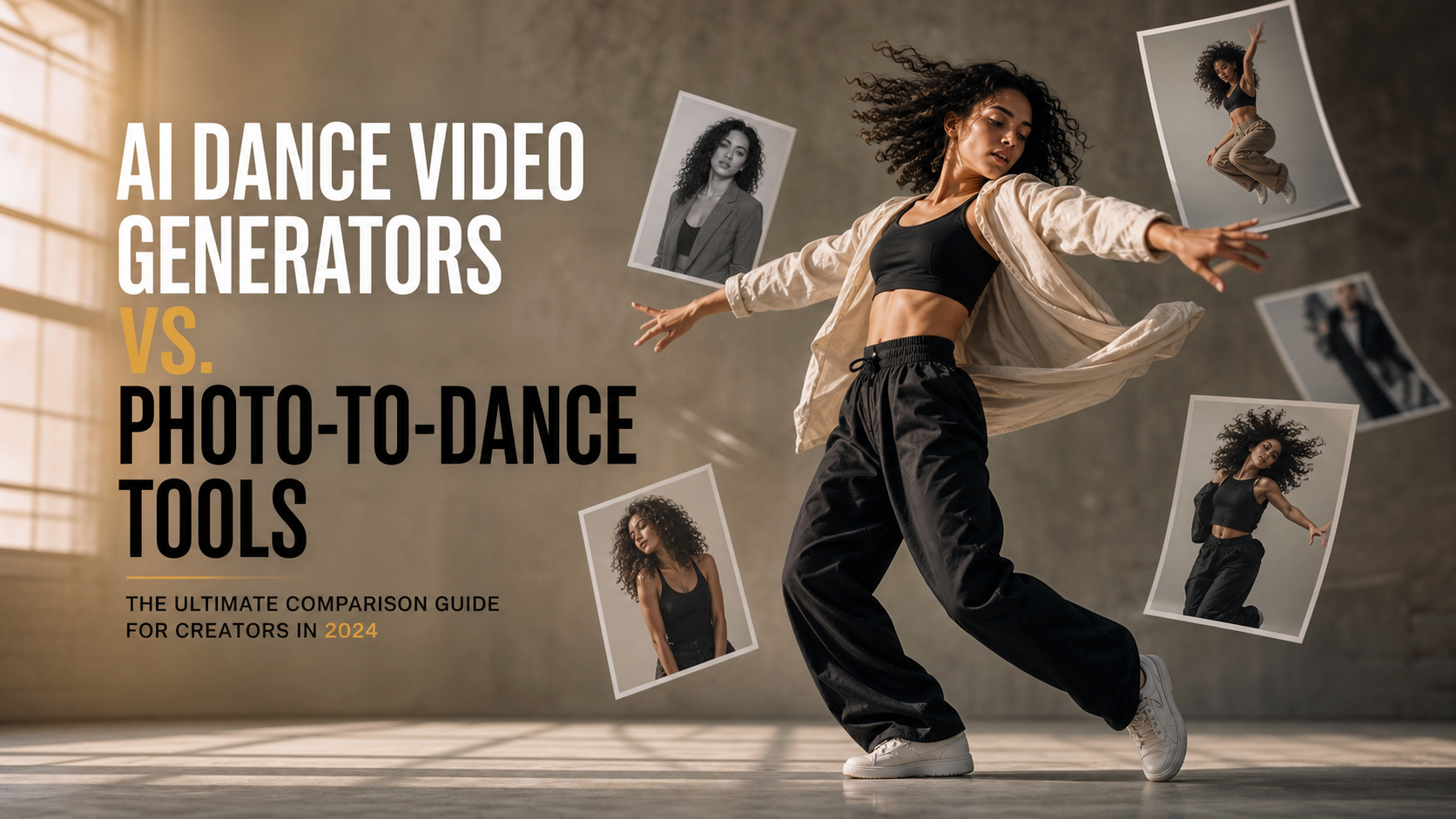
The Clipfly AI Dance Video Generator is one of the tools people search for when they want to make a photo dance without rigging, keyframes, or a traditional video shoot. The bigger question is practical: if you have one portrait, pet image, mascot design, or character photo, which workflow helps you turn it into a usable short-form clip fastest?
This guide compares Clipfly-style dance generation with SeeVido AI Dance Video Generator as a practical photo-to-dance alternative for TikTok, Instagram Reels, YouTube Shorts, meme pages, casual creator posts, and lightweight marketing tests. Clipfly and SeeVido are separate platforms. SeeVido is not Clipfly, and this article does not imply that either platform powers or officially partners with the other.

What Clipfly AI Dance Video Generator Searchers Usually Need
Most people searching for a Clipfly AI Dance Video Generator are not looking for a studio-grade animation pipeline. They want a fast way to upload a photo, choose a dance direction, and get a short clip that feels shareable enough for a social post.
That search intent usually includes a few needs: a simple photo-to-dance workflow, enough control over dance style and pacing, vertical video support, reasonable character consistency, and a clear download path. Some users also care about face-focused dancing portraits, group dance clips, pet dance clips, mascot clips, and meme-ready formats.
The important comparison is not “which tool is universally better.” It is which tool fits your specific job. A meme-page owner may care most about speed and humor. A fashion creator may care about outfit stability. A marketer may care about clean exports, usage rights, and repeatable variations. A casual user may care most about whether a single photo can become a fun dance clip without a steep setup process.
Before publishing any claims about Clipfly or SeeVido, verify both live pages for current free-credit availability, generation cost, output duration, resolution, subject limits, music support, download format, watermark rules, privacy settings, commercial-use rights, and subscription requirements. These details can change quickly.

How AI Dance Video Generators Turn Photos Into Movement
An AI dance video generator usually starts with a still image and turns it into a short animation by estimating the subject, pose, body proportions, face area, clothing, and background. The prompt or selected style then guides the dance rhythm, energy, camera framing, and motion intensity.
For simple photo-to-dance tools, the workflow is often: upload one image, describe the dance style, choose ratio or duration settings if available, generate the video, review the result, and regenerate with a tighter prompt. SeeVido’s live AI Dance Video Generator page shows a creator-facing workflow with image upload, duration and ratio controls, and dance-generation positioning for social use cases.
Text descriptions matter because the model needs a motion target. “Make this person dance” is usually weaker than “a relaxed hip-hop groove with simple footwork, fixed full-body camera, soft studio lighting, preserve outfit and face.” The second prompt gives the generator a subject, action, energy level, camera behavior, preservation rules, and failure points to avoid.
The best results usually come from matching the source image to the expected motion. A full-body standing image works better for footwork than a cropped selfie. A clean background helps reduce wobble. A centered subject gives the model more room to move without cutting off hands or shoes.

Clipfly vs SeeVido: Practical Comparison Criteria
Compare Clipfly and SeeVido by testing the same source image, the same output goal, and the same dance direction. That keeps the review grounded in actual creator needs instead of abstract model claims.
| Criterion | What to Check | Why It Matters |
|---|---|---|
| Single-photo setup | Can you upload one character photo and generate quickly? | Casual creators want low-friction output. |
| Individual, face, and group clips | Does the tool support solo portraits, face dance, or group dance? | Clipfly searchers may be looking for different dance formats. |
| Prompt-based direction | Can you describe dance style, energy, tempo, mood, or camera framing? | Prompts help control the clip beyond a generic movement. |
| Character consistency | Does the face, outfit, body shape, or pet marking stay stable? | Identity drift makes clips less usable. |
| Full-body movement | Are hands, feet, limbs, and turns readable? | Dance videos fail fast when anatomy breaks. |
| Background stability | Does the scene wobble, smear, or change unexpectedly? | Stable backgrounds feel more polished on social feeds. |
| Social ratios | Are 9:16, 1:1, or 16:9 formats available? | TikTok, Reels, Shorts, and embeds use different crops. |
| Duration and looping | Can you make a short, repeatable clip? | Many dance memes and Shorts need tight pacing. |
| Editing, music, and export | Are music, download, or editing options available? | Final publishing often needs trimming, audio, and captions. |
| Pricing and credits | What does each generation cost today? | Creators testing many prompts need predictable spend. |
Use Clipfly’s AI Group Dance Video Generator only as evidence for Clipfly-specific group-dance features after checking the live page. Use SeeVido pages only as evidence for SeeVido. Third-party summaries, search snippets, and older blog posts should not be treated as current product truth.

Why SeeVido AI Dance Video Generator Is a Strong Clipfly Alternative
SeeVido AI Dance Video Generator is a strong alternative for creators who want a direct photo-to-dance workflow rather than a broad editing suite first. The live page presents the experience around uploading an image, selecting generation settings such as duration and ratio, and producing short dance-oriented videos.
That makes SeeVido useful for lightweight social experiments: a pet dance joke, a mascot celebration, a fictional character trend, a fashion-turn clip, or a vertical dance meme. It is especially relevant when the goal is not professional choreography, but a shareable first draft that can be tested on TikTok, Reels, Shorts, or a private content calendar.
SeeVido also connects naturally to related workflows. Use SeeVido Photo-to-Video or Image-to-Video when the movement is not specifically dance. Use SeeVido AI Video Generator for broader text-to-video or image-to-video ideation. Use SeeVido AI Music Video Generator when the creative direction is closer to a music-led video concept.
The practical recommendation is simple: try SeeVido first when you want a direct photo-to-dance alternative to Clipfly, then move to more advanced video tools when you need choreography transfer, reference motion, music timing, or deeper editing.

What Input Photos Produce Better AI Dance Movement
The source image is the biggest quality lever in an AI dance video generator. A clean, full-body image gives the model more information about pose, proportions, limbs, clothing, and movement boundaries.
For people and fictional characters, start with a centered subject, visible head-to-toe body, clear hands, simple clothing silhouette, and a pose that can plausibly begin the dance. Avoid heavy cropping, extreme sitting poses, crossed limbs, occluded feet, complicated props, and cluttered backgrounds. If you only have a close-up portrait, use a face-focused or subtle upper-body movement prompt rather than asking for complex footwork.
For pets, use a sharp image with the face, body shape, fur pattern, and legs visible. Pet dance clips work best when the prompt keeps movement playful and simple. For mascots, illustrated characters, and brand-like fictional figures, preserve body shape and costume design while asking for simple celebratory movement rather than aggressive spins.
For fashion content, prioritize outfit stability. Ask the generator to preserve clothing shape, fabric color, silhouette, and body proportions. Keep the camera fixed or slow-moving so the clothes remain readable. A six-second runway turn may be more useful than a chaotic dance trend if the goal is showcasing an outfit.

Prompt Formula and Examples for AI Dance Videos
A good AI dance video prompt gives the generator motion direction and preservation rules at the same time. The motion part tells the clip what to do. The preservation part tells it what not to damage.
Reusable prompt formula:
Animate the uploaded [person, character, pet, or mascot] performing a [dance style] routine with [energy and tempo]. Preserve [face, hairstyle, outfit, body proportions, or character design]. Use a [shot type] with [camera behavior], [setting], and [lighting]. Keep the movement smooth and avoid [distorted limbs, identity drift, changing clothes, camera shake, or unstable backgrounds].
Copy-to-use prompt examples:
Animate the uploaded character performing a relaxed hip-hop groove with confident arm movement and simple footwork. Preserve the face, hairstyle, outfit, and body proportions. Use a fixed full-body camera and soft studio lighting.Turn the uploaded portrait into a cheerful K-pop-inspired dance video with lively but controlled movement. Keep the character centered, preserve facial identity, and use a bright pastel stage background.Animate the uploaded pet performing a playful two-step dance with gentle bouncing movement. Preserve the pet’s fur pattern, face, and body shape. Use a fixed camera and a colorful social-video setting.Create a smooth jazz-dance performance from the uploaded full-body image. Use elegant turns, restrained arm gestures, warm theater lighting, and a stable wide shot. Avoid rapid spins and distorted hands.Animate the fictional mascot performing a short celebratory dance suitable for a vertical meme video. Preserve the costume design and proportions. Use energetic movement, confetti, and a clean generic background.Create a six-second vertical dance loop featuring the uploaded fashion character. Use simple runway-inspired steps, one controlled turn, editorial lighting, and a fixed full-body composition. Keep the clothing unchanged.Animate the uploaded anime-style character performing a light street-dance routine. Preserve the original illustration style, costume, face, and silhouette. Use smooth motion and a neon urban background without camera shake.Create a social-ready dance clip with one clear hook in the first second. The uploaded character begins still, then performs a playful side-step and hand gesture. Use vertical framing, natural movement, and a seamless loop ending.
When a result looks unstable, simplify one element at a time. Reduce the dance complexity, keep the camera fixed, choose a wider shot, or ask for slower movement. For social clips, boring but clean motion often performs better than ambitious motion that breaks the subject.

When to Use Kling Motion Control for Dance Motion Transfer
Use SeeVido Kling Motion Control when you need a subject to follow a specific dance motion from a reference video. This is different from a simple prompt-led dance generator.
SeeVido’s Kling Motion Control page describes a workflow based on uploading a character image and a motion video so the subject can follow the motion from the reference. The page also notes that matching character proportions to the reference video helps produce more natural movement. That matters for dance, because pose direction, body type, camera angle, and starting stance all affect the final animation.
Choose regular photo-to-dance generation when you just need a fun clip from a single image. Choose motion control when the choreography itself matters: a specific side-step, turn, hand gesture, celebration move, or dance trend rhythm. Motion control is also useful for creators who want to test the same character image across different reference performances.
The trade-off is preparation. A simple dance generator can be faster. A motion-control workflow asks you to prepare both a clean image and a suitable reference video. For more directed character movement, that extra setup can be worth it.

How to Prepare Dance Clips for TikTok, Reels, and Shorts
Short-form dance clips need a fast visual hook. The first second should show motion clearly, keep the subject centered, and avoid confusing camera movement.
For TikTok, Instagram Reels, and YouTube Shorts, start with 9:16 vertical framing when the platform supports it. Keep the subject full-body if the dance includes footwork. Leave enough headroom and footroom so hands, shoes, ears, tails, costumes, or props do not get cropped during movement. If the output starts as 16:9, crop carefully and check whether the body still reads in vertical format.
Use short prompts for short clips. Ask for one clear action: side-step, hand wave, runway turn, bounce, hip-hop groove, jazz turn, or celebratory move. If you want a loop, say so directly: “begin still, perform one side-step and hand gesture, return to a similar ending pose for a seamless loop.”
After generation, review the clip like a social editor. Check the first frame, motion readability, face stability, hand shape, background wobble, crop, audio fit, caption space, and whether the clip could be misunderstood as a real person doing something they did not do. Add music and captions only after the video passes the basic visual review.

Safety, Rights, Pricing, and Final Recommendation
The best AI dance video generator is the one that fits your use case while respecting rights, privacy, and platform rules. Treat outputs as creative drafts, not guaranteed final assets.
Use your own images or images you have permission to animate. Avoid deceptive celebrity impersonation, non-consensual likeness manipulation, copyrighted character misuse, protected brand marks, and clips that falsely represent a real person. If the video is for marketing, ecommerce, or paid social, check commercial-use rights, watermark rules, and download permissions before publishing.
Before choosing between Clipfly and SeeVido, verify the current live details: free credits, subscription requirements, credit cost, duration, resolution, maximum subject count, music support, downloadable formats, watermark behavior, privacy settings, storage behavior, and commercial-use terms. Do not assume that either platform is unlimited, watermark-free, private by default, or commercially unrestricted unless the live product and legal pages confirm it.
Final recommendation: try SeeVido AI Dance Video Generator when you want a straightforward photo-to-dance alternative to Clipfly for short social clips. Use SeeVido Kling Motion Control when you need reference-driven choreography. Check Clipfly directly when group dance, face dance, or Clipfly-specific editing tools are the deciding factor.
FAQ
Is SeeVido the same as Clipfly?
No. Clipfly and SeeVido are separate platforms. Use Clipfly sources for Clipfly-specific claims and SeeVido sources for SeeVido-specific claims.
Can I make a picture dance with AI from one photo?
Yes, many AI dance video generator workflows are built around one uploaded photo. Results usually improve when the image has a centered, visible full-body subject and a clean background.
Which is better for TikTok dance clips: Clipfly or SeeVido?
Test both with the same image, prompt, ratio, and output goal. SeeVido is a practical alternative for direct photo-to-dance creation, while Clipfly may be relevant if its current dance or group-dance tools match your specific format.
When should I use Kling Motion Control instead of a dance generator?
Use Kling Motion Control when the subject needs to follow motion from a specific reference performance. Use a simpler dance generator when a prompt-led dance style is enough.
Sources and Related Reading
Primary pages checked for this article include SeeVido AI Dance Video Generator, SeeVido Kling Motion Control, SeeVido Photo-to-Video, SeeVido Image-to-Video, SeeVido AI Music Video Generator, SeeVido AI Video Generator, SeeVido AI, and Clipfly AI Group Dance Video Generator.
Useful follow-up reading: How to Make Viral TikTok Dance Shorts with an AI Dance Video Generator, AI Dance Video with Kling Motion Control, How to Create Viral Face Dance Videos with an AI Face Animator, and AIFacefy Upgrade to SeeVido.